Advanced · for curious minds

Advanced Programmes

Maths and Science Olympiad, First Principles and the AI Builders Camp, for curious primary and secondary students, in small groups. Every class is built on First Principles thinking: break a problem down to what you know for sure, then build the answer up yourself.

Maths OlympiadScience OlympiadFirst PrinciplesAI Builders Camp
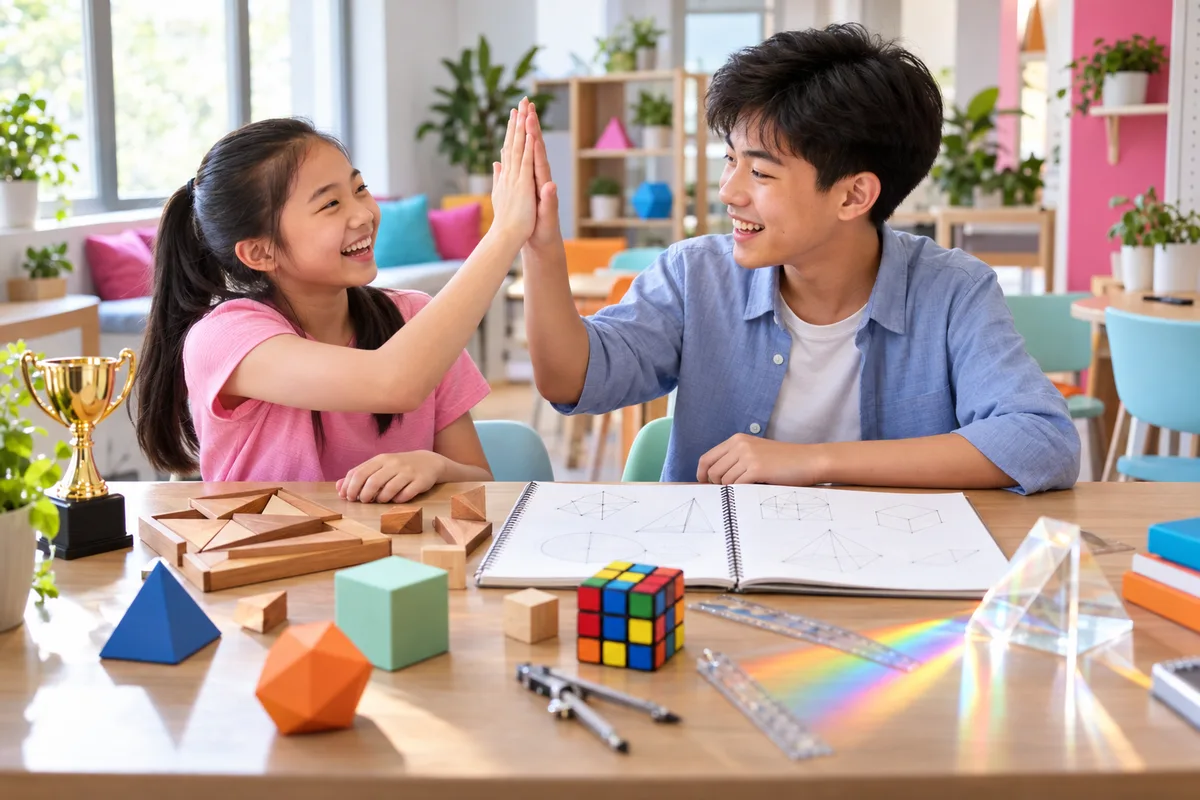
Two students high-fiving after solving an Olympiad puzzle together

Our programmes

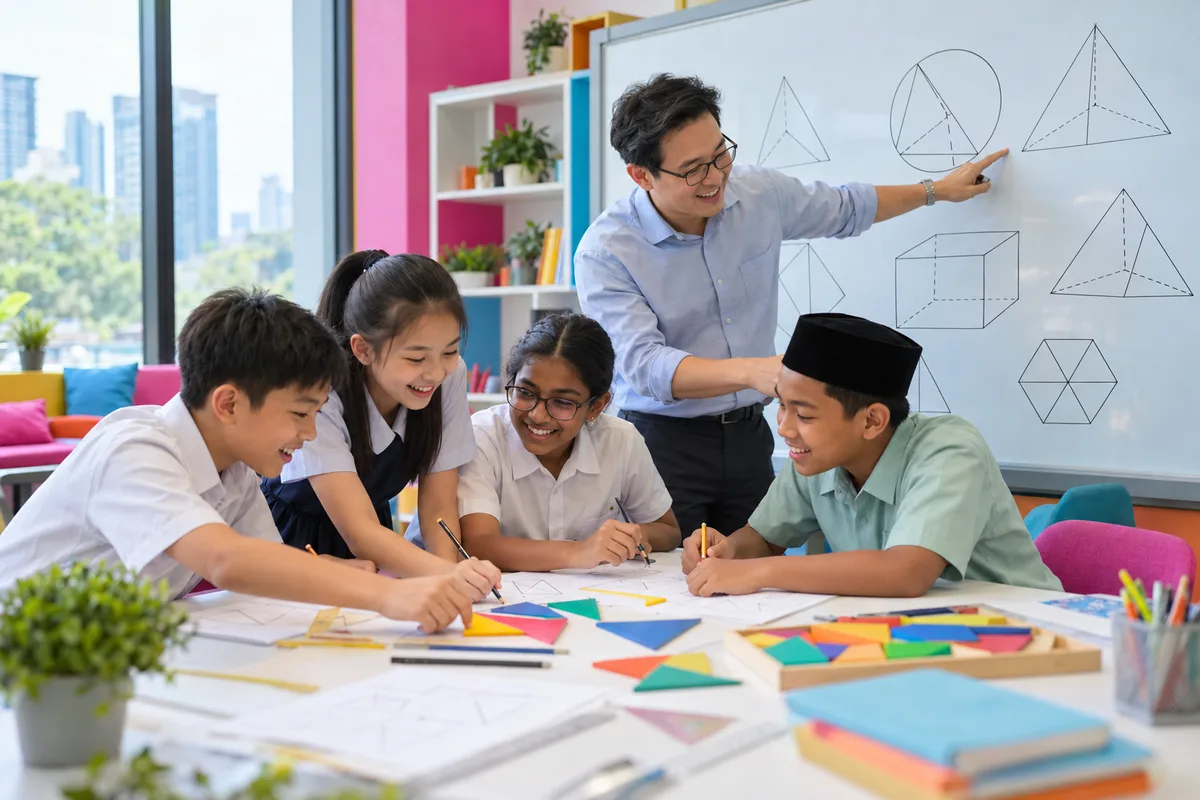
Students solving a maths olympiad puzzle together with their tutorPrimary and Secondary · small groups or 1-to-1

Maths Olympiad

Contest-style problem solving. The P1–P6 Olympiad Maths Club starts in January 2027; secondary and private sessions by arrangement.

Starts January 20271 to 3 per classPrivate 1-to-1
See full detailsHide details

Three primary groups, one way of thinking

  • P1–P2 Foundation: patterns, logic puzzles, counting carefully and working backwards.
  • P3–P4 Intermediate: heuristics such as supposition, before-and-after, counting ways and simple number theory.
  • P5–P6 Contest Ready: harder non-routine problems under contest timing, with full written solutions, which also sharpen PSLE problem sums.

Children are placed by a short puzzle check, not by school level alone.

How every lesson runs

  1. A warm-up puzzle to switch brains on.
  2. One big idea, explained from first principles: why it works, not just the steps.
  3. A levelled contest set, so every child works at the edge of what they can do.
  4. Explain it: children explain their reasoning out loud.

Secondary students and private 1-to-1

Secondary students work on deeper number theory, algebra, counting and geometry for SASMO and SMO. Private 1-to-1 sessions are planned around one child: a specific contest, a DSA goal or a topic to master.

Contests we prepare for

SASMO, SEAMO, APMOPS, the Raffles Mathematical Olympiad, NMOS and SMO. Most entries close by February to March, which is why the club starts in January.
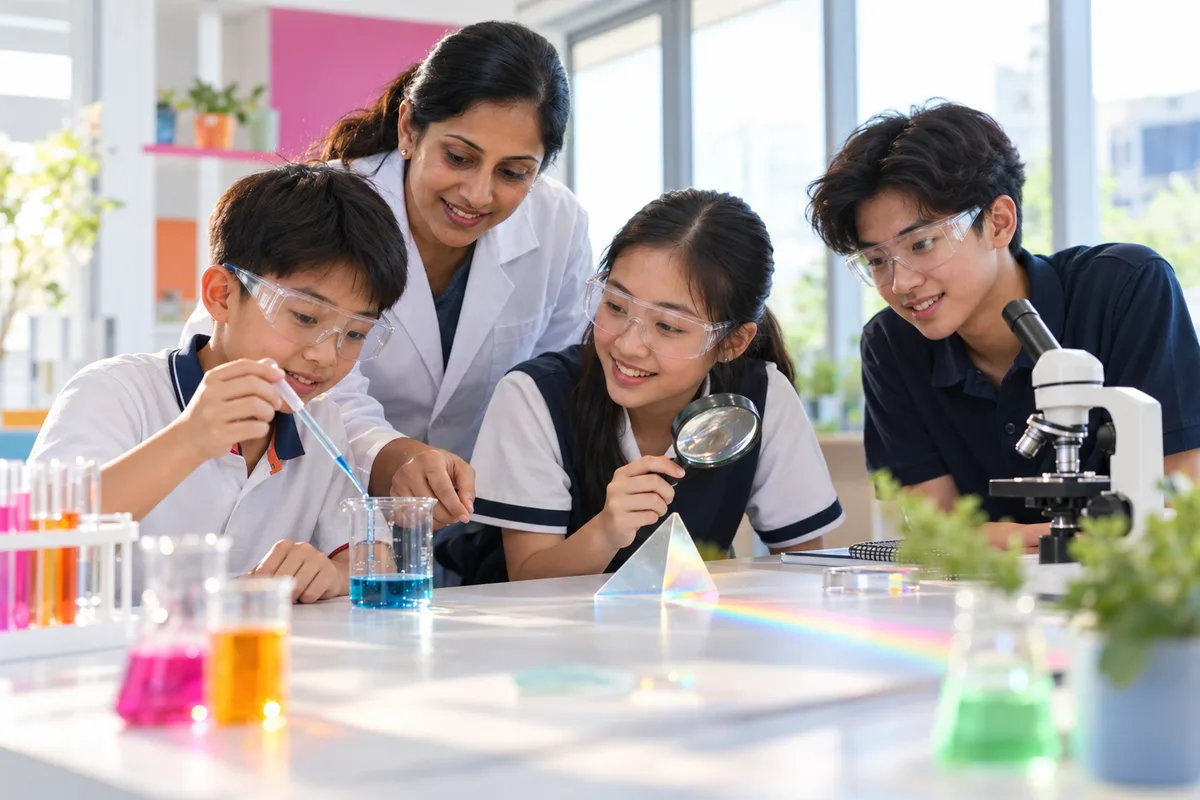
Students in goggles carrying out a science investigationPrimary and Secondary · small groups or 1-to-1

Science Olympiad

Beyond-syllabus science, experiment thinking and contest-style questions. Contact us for a plan for your child.

Primary and Secondary1 to 3 per classPrivate 1-to-1
See full detailsHide details

What we cover

  • Primary: beyond-syllabus science across the MOE themes, reading graphs and data, planning fair tests, and explaining answers with the right scientific words.
  • Secondary: physics, chemistry and biology beyond the lower-secondary syllabus, multi-step problems, and experiment and data questions.
  • Thinking like a scientist: asking good questions, predicting, testing and explaining why.

Contests we prepare for

The Singapore Primary Science Olympiad (P5), and the junior physics, chemistry and biology olympiads and the National STEM Championship for secondary students. Students enter through their school, and most registrations close between February and April.

How to start

  1. Tell us your child's level, school and any contest in mind.
  2. We talk it through and look at recent results if you have them.
  3. We recommend a small group or private 1-to-1 sessions.
  4. Your child starts at our Ang Mo Kio centre.
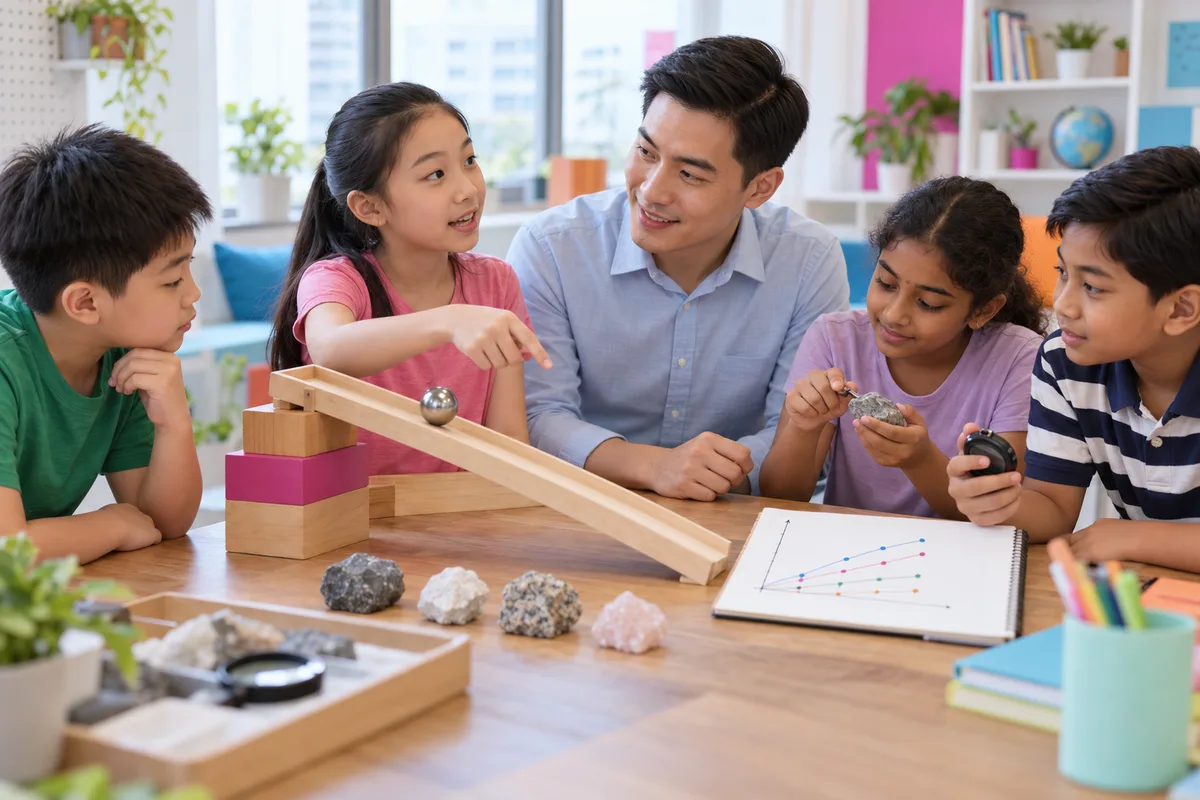
Children testing their own ideas with a ramp and rocks while their teacher listensCurious children · real-life issues

First Principles

We tackle real-life issues from first principles, inspired by Feynman and Elon Musk: check what is real, find the real problem, and test solutions.

12 weekly lessons per themeSmall groups
See full detailsHide details

School teaches what to know. First Principles teaches how to know, and uses it on real-life issues. Inspired by Richard Feynman, our founder's great-grand-teacher, and by Elon Musk, children learn to go back to what is really true, and build their thinking up from there.

Understand it, then check it

We start the way Feynman did: if you can't explain something simply, you don't understand it yet. Then we ask the question that matters more than ever, now that AI can write anything in seconds: how do we know? Children learn to trace information back to where it came from, to separate facts from opinions, and to check before they believe.

Analyse like a scientist

From data, we look for patterns. From patterns, we build a model to explain them. Every model works until it doesn't, as Newton's laws did until Einstein. So children learn to stay humble and open, and to keep testing instead of rushing to conclude.

Find the real problem

Many problems feel bigger than they are, because we tackle them with emotions and arguments. We take a real-life issue, say it in one simple sentence, and keep asking why until we reach the real problem underneath. Very often, the real problem is smaller, and easier to solve, than the one we started with.

Real needs or made-up wants? Many products and services today answer needs and wants that are no longer real. Some have been carefully shaped by marketing and social pressure, for profit and for power. We help children pause and ask: Do I really need this, or was I taught to want it? Who benefits if I believe it? What would happen without it? The aim is not to distrust everything. It is to think clearly and choose freely.

Solve it, then test it

Children list every possible solution before choosing one, and even invent their own way, as if they were the first person ever to face the problem. Then they test it, measure it, improve it and test it again. As the statistician George Box said, all models are wrong, but some are useful.

See the bigger picture

Finally, we step back. School, work, family and the games we play are all different worlds, each with its own rules for success. Children learn to ask who set the rules, what they measure and what they miss. Each theme ends with every child presenting a real-life issue they have worked through, from the first question to the tested solution.

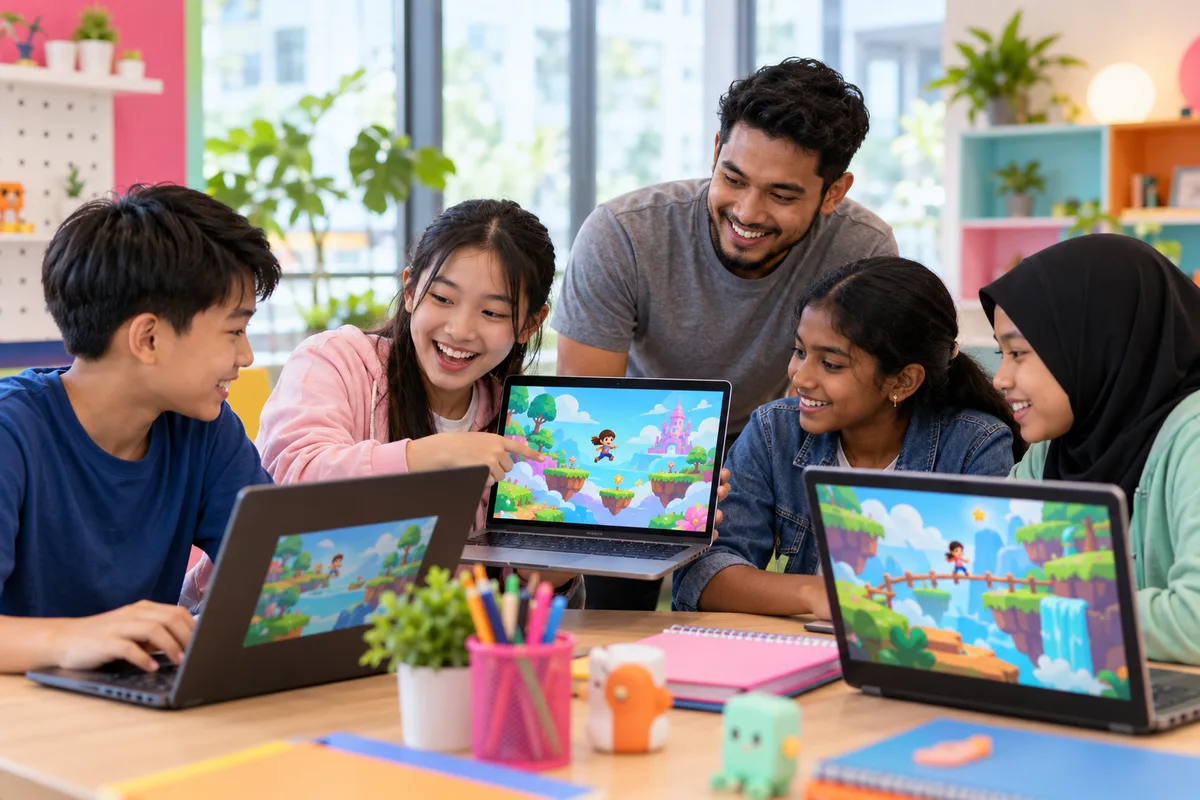
Children building a video game on laptops with their teacherP4 to Sec 3 · December holidays

AI Builders Camp

Four mornings to build a real game or app with AI, learn to check its mistakes, and present it on Demo Day.

December 2026 school holidays4 mornings × 3 hUp to 8 per camp
See full detailsHide details

Four mornings, one finished project

  1. Think it: pick an idea, plan it on paper, and learn how AI works and the rules for using it safely.
  2. Build it: describe each part clearly and build it with AI.
  3. Test and fix it: play-test with friends, find the bugs and the AI's mistakes, and fix them.
  4. Demo Day: present to parents. Every child leaves with their project and a certificate.

Safe by design

  • No personal accounts: children use the centre's supervised AI accounts.
  • Up to 8 children, with the teacher beside them.
  • AI never does schoolwork. It is a tool for building something new.

Do they need to know coding?

No. They describe what they want in plain English, then learn to check and improve the result.

Olympiad: small groups or private 1-to-1

Small groups: our main focus

Typically 1 to 3 students per class, because olympiad training is niche and specialised. Children are matched by level and contest, and learn faster when they explain and debate ideas together.

Private 1-to-1

A private session planned around one child: a specific contest, a DSA goal or a topic to master.

Planned case by case

Tell us your child's level and goals, and we will recommend the right option and send you the details.

Find out more on WhatsApp

Tell us your child's level and which programme interests you. We will reply with the right group or a private plan, and the details.